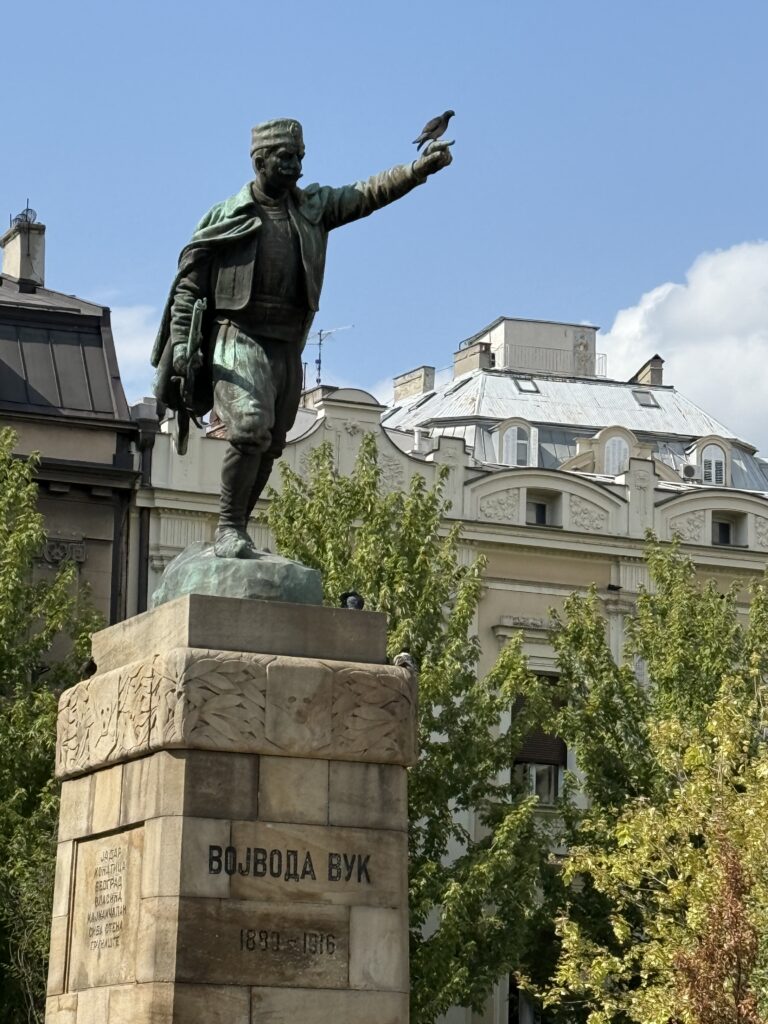
War has been the world’s religion. Its temples are carved from stone and sorrow, its hymns rise as national anthems, its holy days marked by battles remembered. We build monuments to grief, consecrate ground with blood, and teach our children that belonging is born in resistance. This is the liturgy we have inherited: to measure ourselves not by what awakens us, but by what wounds us.
But what if the axis tilted? What if humanity was not sculpted by grievance, but by wonder? Not gathered around the bonfire of anger, but around the flame of delight? Imagine a world where identity is woven not from scars but from songs, where nations are not borders of pain but choirs of voices rejoicing in what they love.
The Psalmist once glimpsed such a vision: “In Your presence there is fullness of joy, at Your right hand are pleasures forevermore.” What if that were our creed—that joy is not ornament but essence, not luxury but law?
Then psychology would be rewritten. We would no longer define ourselves by wounds unearthed, but by beauty received. Our resilience would not be measured by endurance of pain, but by the willingness to be undone by awe. The Buddha spoke it simply: “Happy indeed we live, friendly amid the hostile… content among the greedy.” To live in joy, even when the world does not, would be the highest art of mind.
Politics, too, would be reborn. Leaders would not gain power by naming enemies, but by awakening imagination. The Qur’an whispers the true economy: “In the bounty of Allah and in His mercy—in that let them rejoice; it is better than all they accumulate.” Authority would be measured not in fear imposed, but in delight multiplied—festivals, gardens, and gatherings of song becoming the infrastructure of power.
Religion would shed its armor of escape and become immersion in ecstasy. Christ himself prayed: “That my joy may be in you, and that your joy may be full.” Salvation would not be exile from suffering, but communion with joy. Pilgrimage would be less about penance than about bowing before the pulse of life in rivers, birds, and stars.
Science would shift its hunger—from controlling nature to marveling at it. Lao Tzu counseled: “Contentment is the greatest treasure. He who knows when to be content will always be joyful.” Imagine laboratories devoted not to weapons but to wonder, researchers charting not destruction but the architecture of awe.
Even grief would be altered. Loss would not exile us from joy, but deepen our capacity for it, as tears carve channels wide enough to carry song again. The Guru Granth Sahib sings: “Where there is the Name of the Lord, there is bliss, there is peace, there is truth.”Mourning would not close the heart—it would prepare it for rejoicing.
And children—our first prophets of wonder—would be taught not to guard against pain, but to recognize joy as their first wisdom. Education would be the art of teaching awe: how to see the shimmer of light on water, how to bow before a flower, how to sit in silence without fear.
Such a world is no utopia. Death would still arrive, shadows still fall. But grief and shadow would no longer be enthroned as the center of human identity. The cornerstone would be joy. Rejoicing would be our passport, our constitution, our sacred law.
And the sages of every lineage have already declared it. The Upanishads thunder the final word:
“Ānando brahma iti vyajānāt—Bliss is the very nature of Brahman. From bliss we are born, by bliss we live, and into bliss we return.”
Practices for Rejoicing in Daily Life
To let this vision breathe in our ordinary hours, here are small, self-verifying acts—simple, realistic, repeatable—that shift the axis from grievance to joy:
1. Pause and Name One Joy
At least three times a day, stop and ask: “What in this moment brings me delight?” It could be the way sunlight falls across the table, the warmth of tea, or the sound of a bird. Let that recognition be enough.
2. Five Breaths of Gratitude
Choose five full breaths where each inhale receives, and each exhale names something you rejoice in: a friend, a memory, a sensation, a hope, a truth. This anchors the nervous system in joy.
3. Silent Bowing
Each time you cross a threshold—a doorway, a street, a room—bow inwardly in gratitude. This act, invisible to others, consecrates movement with reverence.
4. Rejoicing with Others
When someone shares good news, train yourself not just to nod, but to rejoice with them. Speak their joy aloud: “That’s beautiful. I celebrate this with you.” Shared joy multiplies.
5. Choose Beauty Once a Day
Intentionally place yourself before something beautiful—art, music, a tree, the sky—and give it your full attention for five minutes. This becomes a daily altar.
6. Close the Day in Delight
Before sleep, ask not “What troubled me?” but “Where did I rejoice today?” Write or whisper one answer. This is a reorientation of memory itself.