Categories
Insights

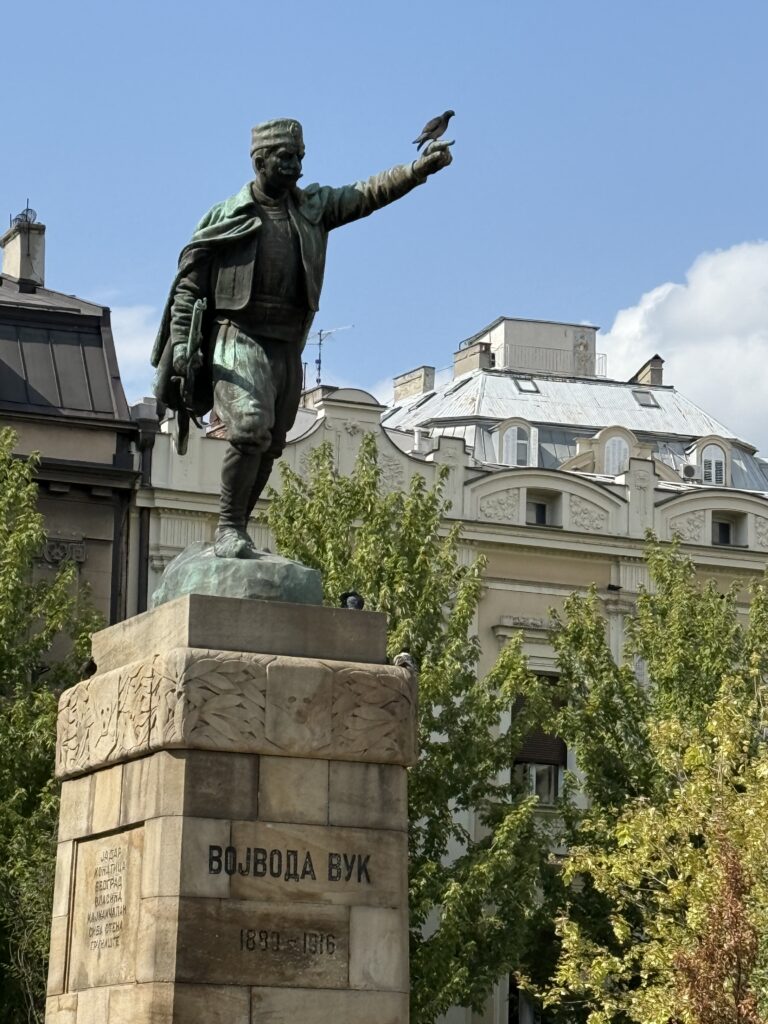
Nikad Ne Zaboravi!

Zašto nosiš tuđu zastavu na grudima?
Misliš da te čini jačim?
Ne vidiš li uvredu —
da zaboraviš sopstvenu krv, sopstvenu priču,
da prodaš dušu za plastiku?

Već imaš sve.
Sveće slave što gore,
pesme Vidovdana što odzvanjaju,
badnjak što puca u noći Božića,
ajvar i kajmak rukom spravljen,
sarma što se krčka u zimskim kuhinjama.

Već imaš sve.
Gusle što pevaju o junacima,
kolo što spaja strance u jedno telo,
trube u Guči što tresu zemlju,
pirotski ćilimi sa svetim šarama,
manastiri na Fruškoj Gori što niču kao kamene molitve.

A ti — klanjaš se holivudskim idolima,
juriš prazne mode,
obožavaš kulturu bez pamćenja
dok tvoja preliva od njega.

Srbija je preživela carevine,
ratove, izdaje, sankcije.
I dalje gusle sviraju.
I dalje se rakija toči za prijateljstvo.
I dalje se slavi Slava,
komšija zakuca na vrata s kafom i hlebom.

Šta je religija?
Nije zastava tuđina,
nije san carstva preko mora.
Religija je ljubav prema svom narodu.
Religija je da nikad ne zaboraviš ko si.
Religija je inat — sveti oganj prkosa.
Religija je merak — radost u jednostavnom životu.
Religija je gostoprimstvo — da i stranca dočekuješ kao brata.

Zašto onda da klečiš pred tuđim oltarom?
Zašto da obožavaš ono što nikad nije bilo tvoje?

Probudi se.
Seti se.
Nisi kopija.
Nisi senka.

Srbija ne pozajmljuje kulturu.
Srbija jeste kultura.
Nikad ne zaboravi.
Categories
Insights

The Snail and the Spiral Path of Awakening

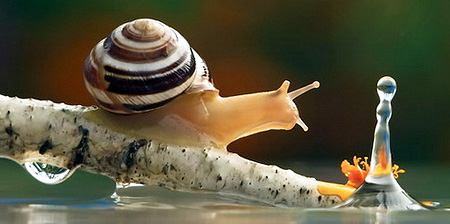
When I was a child, I would crouch in the garden for hours watching snails. To most people they were slow, slimy, forgettable creatures. But to me, they were monks of the soil. Their shells fascinated me—their spirals were perfect diagrams of infinity, coiled galaxies small enough to fit in the palm of my hand. I did not have the language then for sacred geometry or Fibonacci sequence, but I knew in my bones that these creatures carried the same mathematics that shaped sunflowers, storms, and stars.

I remember holding them with breathless patience. If I shifted too much, if I poked or prodded, they would retreat instantly, collapsing into the safety of their spiral fortress. Inside, they were untouchable, but also blind, sealed away from food, movement, and light. Only when I grew still—utterly still—did they begin to emerge. First the soft glisten of their bodies, then the delicate feelers, then at last their tiny faces opening to the world. To hold a snail was to be taught meditation long before I had words for meditation.

Years later, as I sat in silence on a cushion, I realized that the chakras behave in just this way. Each one is a living spiral of subtle energy, a wheel of awareness turning within the body. And like the snail, each chakra longs to extend itself into the world, to touch, to see, to explore. But the moment life becomes too loud, too harsh, too violent, they recoil. A harsh word can send the throat chakra back into hiding. A broken trust can send the heart curling into itself. Fear can send the root deep underground. Protection is their gift, but also their prison. Safe, but sealed.

And yet there is another way. When we come to meditation with stillness, gentleness, and patience, the chakras, like snails, begin to unfurl. Not all at once. Slowly, shyly, with hesitation, but also with wonder. The root extends first, testing the ground. Then the sacral chakra glides out, tasting the sweetness of water and connection. The solar plexus emerges with courage, discovering that power is not domination but light. The heart opens, and its radiance is like the rainbow trail of the snail, leaving behind a subtle blessing of compassion wherever it moves. The upper chakras reach out like antennae into subtler realms: the throat, expressing the truth; the third eye, perceiving the invisible; the crown, spiraling into infinity itself.

This is why forcing never works. We cannot pry open a snail. We cannot wrench a flower to bloom. And we cannot crack open the chakras with pride or ambition. They open only in the presence of stillness, safety, and trust. In that quiet, what was once hidden awakens. What was once closed begins to see, to feel, to explore.

The snail teaches us that even the smallest, slowest movement leaves behind a rainbow. Every journey, no matter how humble, becomes a trail of light. In the same way, every moment of presence we bring to the world leaves behind its own iridescence—sometimes invisible to us, but shining quietly for those who come after.

So let us learn the dharma from these small monks of the garden. Carry the monastery of your soul upon your back, but do not live sealed inside it. Trust the spiral. Trust the stillness that coaxes life outward. Move slowly, yes, but move. Allow your chakras, your inner snails, to venture forth. And as they do, you will find that the entire cosmos unfurls within you—petal by petal, spiral by spiral, face by tender face.

The teaching is simple, but inexhaustible: the world reveals itself when we are still enough to let it. And when we are still enough, the rainbow path appears beneath our very steps.

Guided Meditation

Meditation is the art of becoming still enough, tender enough, and patient enough for these subtle snails to emerge. It is not about prying open the petals of the chakras, but about creating the silence where they feel safe to unfurl. What follows is a visualization—a way to sit quietly and invite these spirals of light to reveal themselves, one by one.

Begin by sitting comfortably, spine upright, as though your own body is the great staff of a snail’s shell. Feel the weight of your body resting on the earth. Like the snail, you carry your home with you. Like the snail, you are already whole. Breathe gently. Wait without expectation.

Now bring your awareness to the base of the spine. Imagine a snail tucked into its spiral shell. At first, nothing moves. Simply wait. Offer stillness. With time, you may sense the root chakra beginning to extend—like the snail’s first feelers tasting the earth. It whispers, I am safe, I belong here. Breathe, and let it unfold.

Move now to the lower belly, the sacral chakra. Another snail rests here, coiled in its luminous shell. Do not force it. Simply sit with it. In patience, it too begins to glide forward, tasting the waters of life, whispering, I feel, I flow, I create. See it leaving a trail of silver light, like the snail’s rainbow path, painting beauty upon the world.

At the solar plexus, just above the navel, rests another spiral. This snail emerges with courage. It teaches you that power is not domination but radiance. Feel its body shimmering golden as it whispers, I shine, I act, I am strong. Like the sun warming the garden, this chakra brings warmth to the path.

In the heart, the snail is especially tender. It retreats easily, but when stillness surrounds it, it opens with astonishing beauty. As it extends, its trail is not silver but iridescent, shimmering with compassion. It whispers, I love, I am loved, I am connected. Feel its rainbow light spiraling outward, leaving traces of kindness wherever you walk.

At the throat, another snail unfurls, stretching delicate antennae toward the horizon. It whispers, I speak, I listen, I express. Its trail is a clear blue stream, flowing in and out, carrying truth like water through the world.

The third eye, at the brow, houses a snail of perception. When it emerges, it does not move outward only—it looks inward and outward at once. It whispers, I see, I understand, I awaken. Its trail glows violet and indigo, revealing the hidden geometries that weave all life together.

Finally, at the crown of the head, the last snail rests within its infinite spiral. When it emerges, it does not crawl but blossoms, spiraling upward into the sky. Its whisper is silence, but in that silence is the wordless mantra, I am, I am infinity. Its trail is the Milky Way itself, a cosmic spiral returning to the source.

Sit with this vision. Seven snails, seven spirals, each one moving gently outward, leaving trails of light. You do not rush them. You do not prod them. You only hold the stillness in which they feel safe to emerge. One by one, they open, and you discover that your whole being is a luminous garden path, painted in rainbow light.

What you seek is already within you, coiled in sacred geometry. What is required is not force but stillness, not hurry but patience, not ambition but presence. Like the snail, you are already carrying the spiral of the cosmos within your very form. All that remains is to wait with enough tenderness for it to emerge.

And as you rise from meditation, remember this: even the smallest, slowest step, taken in trust, leaves behind a trail of light.
Categories
Insights Systemic Independence

The Cross, the Jar, and the Infinite Water

The Cry of Forgiveness

When I see Christ upon the Cross, I weep. Not because resurrection is absent from my heart, not because I doubt the cycles of infinite lives, but because ignorance pierces deeper than nails. The words spoken then—“Forgive them, Father, for they know not what they do” (Luke 23:34)—still echo through the marrow of humanity. They are not bound to that one day on Golgotha. They resound in every age, wherever blindness takes hold.

Forgiveness is not an excuse for harm, but recognition of ignorance. The crowd, thinking they preserved holiness, was in fact crucifying it. Yet compassion flowed, even there. The Cross stands as testimony that ignorance is not met with vengeance, but with love.

The Soul and Its Jars

So often the soul forgets its oceanic nature. It pours itself into jars—identities, roles, the fragile vessels of others’ expectations. These jars seem safe, even holy. Yet they are always too narrow. The living water of being cannot be contained.

Every jar breaks. Every vessel cracks. And what feels like loss is, in truth, liberation. The spilling is resurrection. The breaking is grace.

The Divine Council Within

This drama unfolds even within the body, in the sacred council of the brain. The Prefrontal Cortex, a goddess of discernment, was made to guide with clarity, not to contort itself to gain approval. The Amygdala, the fierce warrior, was not meant to guard borrowed altars, but to protect the soul’s own sacred ground. The Anterior Cingulate Cortex, mediator and priest, was not meant to silence truth for the sake of belonging, but to reconcile the heart with its dharma.

When these inner deities are forced into others’ containers, they too suffer a kind of crucifixion. The nervous system bends. The psyche fractures. The waters constrict. But when forgiveness comes—“they knew not what they did”—the council realigns. Each deity returns to its rightful seat, each voice remembered, and the system regains sovereignty.

This is what I call Systemic and Neurological Independence: the realization that the soul’s governance belongs to itself, not to the jars offered by others.

The Cross as Doorway

The Cross, then, is not only the suffering of Christ but the mirror of every soul that forgets. What appears to be an end is in fact a threshold. What appears to be defeat is revelation: the infinite cannot be crucified.

The Buddha said, “There is no joy like the joy of freedom” (Dhammapada 202). The Chandogya Upanishad proclaims, “As rivers flowing east and west merge in the sea and become one with it, forgetting they were separate rivers, so do all beings lose their separateness when they merge at last into pure Being” (6.10.1–2).

Christ at the Cross, the soul in its jars, the council in its confusion—all point to the same mystery: there is a freedom greater than containment, a merging beyond crucifixion.

Forgiveness as Resurrection

Forgiveness is the current that makes resurrection possible. Forgiveness of others, who knew not what they did. Forgiveness of the soul itself, which knew not what it was.

With forgiveness, the jars no longer bind the water in shame. They break open, and the waters flow again, nourishing everything they touch. And in that flowing, the Divine Council is no longer divided. It becomes one body, one governance, one oceanic mind.

Infinite Water

So the tears that fall at the Cross are not despair. They are baptism. They are cleansing. They are vision restored.

The soul is not the jar. The soul is not the nail. The soul is not the wound. The soul is the water. The soul is the well. The soul is the ocean unending.

No jar can contain it. 

No cross can end it. 

The water flows on, through the council, through the body, through every age—forever nourishing, forever free.

Categories
Insights

Biases Toward Beauty: How to Love the Essence of All Beings

Aesthetic morality is one of the quietest and most powerful forces shaping how humans decide what is worthy of life, care, and respect. At first glance, it looks harmless—our preference for butterflies over moths, dogs over pigs. Yet beneath it lies a deep distortion: we allow beauty, familiarity, or cultural taste to dictate moral worth, while dismissing the sentience, suffering, or dignity of those who do not please our senses.

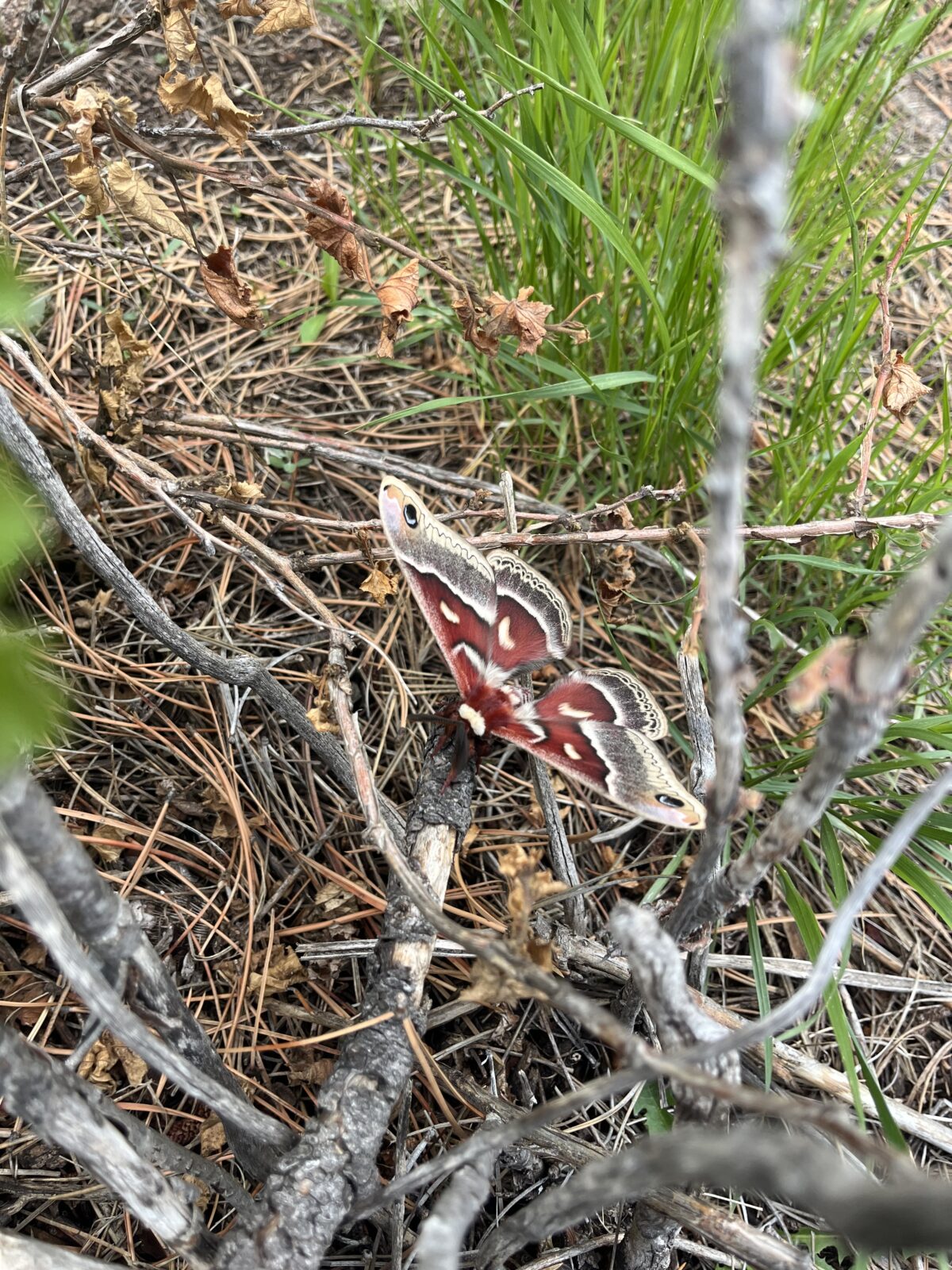
Consider the butterfly and the moth. Both are fragile, both live short lives, both pollinate and play their part in the web of life. Yet the butterfly, with its colors flashing like stained glass, is revered and protected, while the moth, muted and dusty, is swatted without thought. Or take the pig and the dog. The dog, with its eager eyes and expressive face, is elevated to the role of companion, often buried with more ceremony than some humans. The pig, equally intelligent and capable of affection, is reduced to pork chops. The moral difference is not in the animal, but in our aesthetic and cultural coding.

This bias does not end with animals. In human societies, children with disabilities have often been hidden, denied education, or pushed to the margins—not because they lacked potential, but because they failed to fit the cultural image of beauty, strength, or “normality.” Like moths, they were dismissed as burdensome, or worse, as lives less worthy of cultivation. Yet when we look past appearances, it is often these children who reveal the deepest humanity—patience, resilience, and unfiltered presence.

Body image, too, is subject to the tyranny of aesthetic morality. Standards shift across centuries like weather. In the Renaissance, a fuller body signified health and prosperity. In our time, thinness is prized in some cultures, while muscularity is idolized in others. Pale skin once marked refinement, but later tanning was seen as the mark of leisure and vitality. The human body itself does not change; what changes is the cultural lens, deciding which shapes, scars, or shades are celebrated and which are condemned. These shifting ideals prove that what we label as “ugly” or “unworthy” is not an eternal truth but a social invention.

The danger of aesthetic morality is that it masquerades as ethics. It tells us: if it is beautiful, it must be good; if it is ugly, it must be bad. This is how fairy tales have trained us—heroes shine with radiance, while villains are scarred or deformed. This is how entire peoples have been dehumanized in history—described as vermin, diseased, or grotesque—until their destruction felt justified. Aesthetic morality offers the easiest of moral shortcuts: to trust the eye instead of the heart.

But true morality is not about surfaces. It does not ask whether something is pleasing. It asks whether it feels, whether it suffers, whether it carries dignity within itself. The butterfly and the moth, the pig and the dog, the able-bodied child and the disabled child—all share the same claim to existence. When morality is rooted in sentience and essence rather than appearances, the hierarchy of worth collapses.

To move beyond this bias requires deliberate effort. We must learn to catch ourselves when our judgments are aesthetic rather than ethical. We must seek direct contact with what unsettles us—spending time with moths, pigs, disabled children, or aging bodies—until the illusion of ugliness gives way to the reality of shared life. We must teach stories that honor difference, replacing the ancient trope that ugliness equals evil. We must broaden our cultural aesthetics to embrace imperfection, as in the Zen art of wabi-sabi, where cracks, asymmetry, and decay are revered as the most truthful forms of beauty. And most of all, we must anchor our ethics not in taste but in compassion, asking not “is it lovely?” but “can it feel?”

When we cross this threshold, aesthetic morality ceases to enslave us. Beauty is no longer the gatekeeper of worth. The moth becomes as sacred as the butterfly, the pig as valued as the dog, the disabled child as honored as the able-bodied, the scarred body as radiant as the ideal form. Morality matures from a matter of appearances into a matter of essence, and we begin to see the divine not in the sheen of surfaces, but in the fact of being itself.

Categories
Insights

If Humanity Were Defined by Rejoicing vs War

War has been the world’s religion. Its temples are carved from stone and sorrow, its hymns rise as national anthems, its holy days marked by battles remembered. We build monuments to grief, consecrate ground with blood, and teach our children that belonging is born in resistance. This is the liturgy we have inherited: to measure ourselves not by what awakens us, but by what wounds us.

But what if the axis tilted? What if humanity was not sculpted by grievance, but by wonder? Not gathered around the bonfire of anger, but around the flame of delight? Imagine a world where identity is woven not from scars but from songs, where nations are not borders of pain but choirs of voices rejoicing in what they love.

The Psalmist once glimpsed such a vision: “In Your presence there is fullness of joy, at Your right hand are pleasures forevermore.” What if that were our creed—that joy is not ornament but essence, not luxury but law?

Then psychology would be rewritten. We would no longer define ourselves by wounds unearthed, but by beauty received. Our resilience would not be measured by endurance of pain, but by the willingness to be undone by awe. The Buddha spoke it simply: “Happy indeed we live, friendly amid the hostile… content among the greedy.” To live in joy, even when the world does not, would be the highest art of mind.

Politics, too, would be reborn. Leaders would not gain power by naming enemies, but by awakening imagination. The Qur’an whispers the true economy: “In the bounty of Allah and in His mercy—in that let them rejoice; it is better than all they accumulate.” Authority would be measured not in fear imposed, but in delight multiplied—festivals, gardens, and gatherings of song becoming the infrastructure of power.

Religion would shed its armor of escape and become immersion in ecstasy. Christ himself prayed: “That my joy may be in you, and that your joy may be full.” Salvation would not be exile from suffering, but communion with joy. Pilgrimage would be less about penance than about bowing before the pulse of life in rivers, birds, and stars.

Science would shift its hunger—from controlling nature to marveling at it. Lao Tzu counseled: “Contentment is the greatest treasure. He who knows when to be content will always be joyful.” Imagine laboratories devoted not to weapons but to wonder, researchers charting not destruction but the architecture of awe.

Even grief would be altered. Loss would not exile us from joy, but deepen our capacity for it, as tears carve channels wide enough to carry song again. The Guru Granth Sahib sings: “Where there is the Name of the Lord, there is bliss, there is peace, there is truth.”Mourning would not close the heart—it would prepare it for rejoicing.

And children—our first prophets of wonder—would be taught not to guard against pain, but to recognize joy as their first wisdom. Education would be the art of teaching awe: how to see the shimmer of light on water, how to bow before a flower, how to sit in silence without fear.

Such a world is no utopia. Death would still arrive, shadows still fall. But grief and shadow would no longer be enthroned as the center of human identity. The cornerstone would be joy. Rejoicing would be our passport, our constitution, our sacred law.

And the sages of every lineage have already declared it. The Upanishads thunder the final word:

“Ānando brahma iti vyajānāt—Bliss is the very nature of Brahman. From bliss we are born, by bliss we live, and into bliss we return.”

Practices for Rejoicing in Daily Life

To let this vision breathe in our ordinary hours, here are small, self-verifying acts—simple, realistic, repeatable—that shift the axis from grievance to joy:

1. Pause and Name One Joy

At least three times a day, stop and ask: “What in this moment brings me delight?” It could be the way sunlight falls across the table, the warmth of tea, or the sound of a bird. Let that recognition be enough.

2. Five Breaths of Gratitude

Choose five full breaths where each inhale receives, and each exhale names something you rejoice in: a friend, a memory, a sensation, a hope, a truth. This anchors the nervous system in joy.

3. Silent Bowing

Each time you cross a threshold—a doorway, a street, a room—bow inwardly in gratitude. This act, invisible to others, consecrates movement with reverence.

4. Rejoicing with Others

When someone shares good news, train yourself not just to nod, but to rejoice with them. Speak their joy aloud: “That’s beautiful. I celebrate this with you.” Shared joy multiplies.

5. Choose Beauty Once a Day

Intentionally place yourself before something beautiful—art, music, a tree, the sky—and give it your full attention for five minutes. This becomes a daily altar.

6. Close the Day in Delight

Before sleep, ask not “What troubled me?” but “Where did I rejoice today?” Write or whisper one answer. This is a reorientation of memory itself.

Categories
Insights

The Broken Vessel and the Water Within

Beloved seekers, beloved friends—

I once believed that leaving a church meant leaving Christ.

I thought when the jar broke, the water was gone.

But here is the secret: Christ never left.

The jar may shatter, but the water still flows.

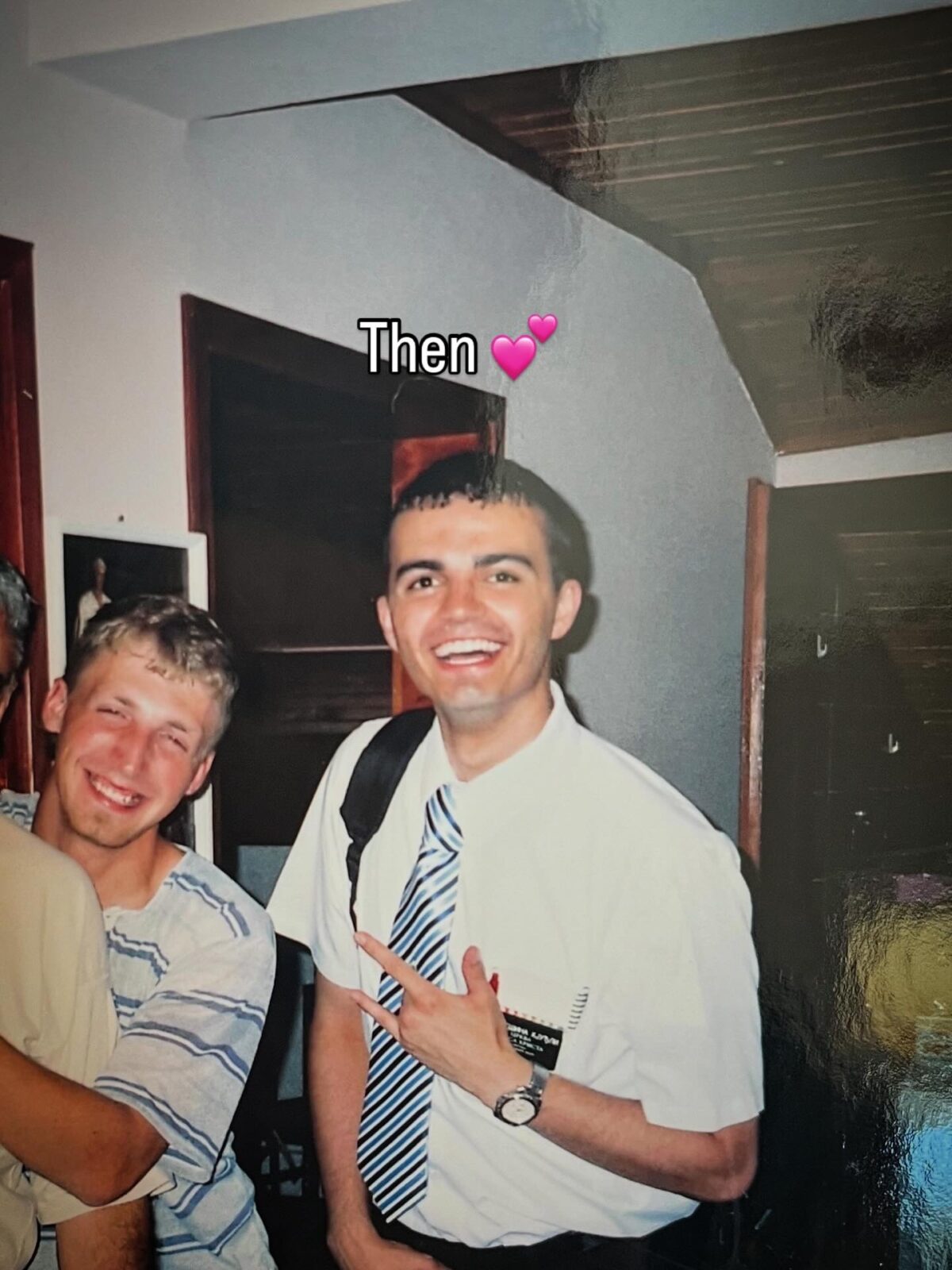
When I was nineteen, I came to Serbia as a missionary. You could spot me a mile away: white shirt, black nametag, the haircut of a man who had just told the barber, “Yes, please make me look like I’m nineteen and very obedient.”

I prayed every morning, noon, and night for the people of this land. And I loved sincerely, as best as I could. At the time, I believed the church was the jar and Christ was the water. My only task: carry the jar, don’t spill it.

Looking back, I see that the jar was far too small for the vastness of Christ. But the water was real. As Paul reminds us, “Love never fails.” (1 Corinthians 13:8) And Krishna says in the Bhagavad Gita“In this path no effort is ever lost.” (2.40) So if you ever wonder whether nineteen-year-old me running around Serbia with a broken accent and boundless zeal meant anything—yes. Even that counts.

Years later, my marriage ended. My community turned away. And I believed Christ had turned too. So I threw it all—my devotion, my service—onto the bonfire. Because in my mind, if you’re out, you’re out.

The psalmist cried it too: “My God, my God, why have you forsaken me?” (Psalm 22:1). But God whispers back in Hebrews: “I will never leave you nor forsake you.” (13:5). Turns out, I was like a kid throwing a tantrum in the living room, certain my parents had left me—when really, they were just in the kitchen making me dinner.

Without the jar, I panicked. So I built a new one—out of performance. I threw myself into service. I worked therapeutically with children and families with special needs. I started a school. A summer treatment program. A meditation center. All of it noble. And yet, if I’m honest? I was like a man duct-taping together jars as fast as possible, hoping one of them would hold the water. But here’s the problem: duct tape spirituality doesn’t hold. And eventually, I burned out.

Paul said it better: “Nothing can separate us from the love of God.” (Romans 8:38–39). And the Upanishads cut through: “Tat tvam asi—Thou art That.”Translation: stop duct-taping jars together. The water is already in you.

But I wasn’t done searching. I went on pilgrimage. To India—where I bathed in the Ganga, sat with gurus, chanted until my tongue was sore. I visited ashrams, monasteries, and temples across the world. I studied Buddhism, Hinduism, Christianity anew, Sufism, the voices of mystics from every tradition. Everywhere I went, I was basically holding out my hands saying, “Excuse me, do you have a bigger jar?”

Each tradition gave me a glimpse. Each jar was beautiful. But each one eventually cracked. Until finally I realized: I was never meant to find a new jar. I was meant to discover that I am the vessel. The Upanishads say: “In the cave of the heart, the Lord of Love dwells.” And Christ whispers still: “The kingdom of God is within you.” (Luke 17:21).

For years I feared I had lost the intimacy I once had with Christ-consciousness. But when I returned to Serbia, walking these streets again, I realized: I left. He didn’t leave me. The disciples said after Emmaus: “Did not our hearts burn within us while he spoke on the way?” (Luke 24:32). Christ was never lost in the jar. Christ was in the burning heart.

And Rumi, with a wink, reminds us: “The lamps are different, but the Light is the same.” So if the lamp breaks? Don’t panic. It’s just glass. The light still shines.

So to you who’ve been cast out for asking questions, for loving too widely, for not fitting the mold: you are not broken. You are not forsaken. You are not lost. Isaiah sings: “I have called you by name, you are mine.” (43:1). And Christ in the Gospel of Thomas declares: “If you bring forth what is within you, it will save you.” (70). Exile isn’t punishment. Exile is training. Think of it as a divine wilderness retreat—except you didn’t sign up for it, and there’s no check-out date.

I no longer feel guilty about nineteen-year-old me showing Christ through the LDS jar. That jar was all I had. Today I see it differently: the jar was seed, the exile was plowing, and what I carry now is fruit. Jesus said: “I have other sheep that are not of this fold.” (John 10:16). The Gita sings: “I am the Self seated in the heart of all beings.” (10.20). The jars may change. They may crack. But the water is eternal.

So let me leave you with this: you are the temple. You are the vessel. The water flows within you. And if you ever forget that? Well, just remember—you can stop shopping for jars. The Living Christ doesn’t need a container.

Christ never left. Christ never will

Categories
Insights

What If You Don’t Need to Be Perfect? 

Dear souls on the sacred path,

There comes a moment in the inner journey when we must ask ourselves, What am I truly seeking? Is it enlightenment, or approval? Freedom, or perfection? Liberation, or the illusion of control? This moment, the one we are sitting in right now, asks not for accomplishment, but for courage. Not for perfection, but for presence.

I want to speak today to the part of you that is exhausted. The part that has tried to earn love through performance. The part of you that quietly measures your worth by how spiritual you appear, how pure your speech sounds, how seamlessly your meditations unfold. That part of you is not sinful. That part is not weak. That part is simply tired of not being allowed to rest.

And so, today, we name the hidden chain: perfectionism. It is a subtle tyrant that disguises itself as discipline, but secretly feeds on our fear of not being good enough, for God, for others, or even for ourselves. In Sanskrit, the word for perfection is siddhi, but in the Vedic understanding, siddhi does not mean flawlessness. It refers to alignment with the Divine. Siddhi is not about image or achievement, it is about the presence of truth. You were never asked by God to be perfect. You were asked to be present.

We often believe we are walking the path of awakening, but sometimes, we are merely walking the path of subtle self-rejection, one that wears the robes of spirituality but is rooted in the fear of being unworthy. We say, “I’m not there yet,” as though “there” is a distant mountaintop we must conquer before we are lovable. We glance sideways at others and wonder, “Why aren’t they evolving faster? Why can’t they feel what I feel?” But these questions are not born from clarity, they are mirrors reflecting our own deep longing to be seen and held without condition.

Perfectionism is a clever trick of the ego, and ironically, it blocks the very love we are striving to embody. In the Bhagavad Gita, Krishna tells Arjuna, “Perform your duty with devotion, surrendering all attachment to success or failure. This equanimity is called Yoga.” That verse reminds us that our worth is not measured by our results. We are free to be both flawed and faithful. We do not need to be finished to be full of God.

Let this be a turning point in your path, not the moment you become better, but the moment you become softer. Let it be the moment you forgive yourself for all the silent ways you’ve judged your heart for not shining fast enough. Let it be the moment your practice becomes an offering, not an obligation. Let this be the moment where you stop asking your inner child to be perfect, and instead sit beside them in love that expects nothing.

In practice, this surrender may look like pausing before you speak, not to edit yourself, but to let your words be soaked in love. It may look like bowing in apology when you’ve judged another’s journey, not because you were wrong, but because your love has grown deeper. It may look like choosing silence when the voice of perfectionism wants to speak. And most of all, it may look like seeing the Divine in those who trigger your judgment, for they are showing you the places within yourself that still ask to be held.

So, let us trade the heavy crown of perfection for the open hands of compassion. Let us trade critique for curiosity. Let us become safe containers, not just for others, but for our own messy, sacred becoming. You are not your standards. You are not your spiritual résumé. You are not here to ascend. You are here to arrive, again and again, with your whole heart.

Breathe, and let the breath say, I am enough. In this breath, I am enough. Let every imperfection become an altar. Let every mistake become a mantra. And let every other soul become your teacher in the art of letting go.

Jai Sri Krishna. Jai Sri Radhe. Jai to the holy mess of becoming. May we walk together, not toward perfection, but toward presence. Let that be our sadhana. Let that be our truth.

Categories
Insights Neurological Independence

The River Heals Without External Force: On Dukkha, Change, and Divine Surrender

Let’s begin with the First Noble Truth—not as an idea, but as a vibration.

A vibration that every body carries. A whisper that every soul has heard.

The Buddha called it Dukkha.

Now, many translate that as “suffering.” But I want to go deeper.

Dukkha is the feeling of instability. It is the ache that comes when the soul forgets that everything… everything is changing.

We crave joy, and it shifts.

We crave peace, and it stirs.

We crave health, and the body bruises again.

I once wrote in my journal:

“If my body is sick, I long for a time that it will be healthy—and yet stagnate in the dream of expectancy rather than receiving.”

Have you ever lived in that dream? That “someday” healing?

That longing for a moment that doesn’t hurt, doesn’t move, doesn’t change?

But here’s the dharma:

Nothing fixed can stay.

And that’s not a flaw. That’s divinity in motion.

In the Samyutta Nikaya, the Buddha said:

“Birth is Dukkha. Aging is Dukkha. Death is Dukkha… Not getting what we want is Dukkha. Getting what we want… and watching it change—also Dukkha.”

The pain, dear family, is not in the change itself.

It is in our resistance to that change.

It is in the illusion that we are the riverbank…

when we are, in truth, the river.

The wise do not grip the fleeting

Krishna speaks to this in the Bhagavad Gita:

“As the soul passes from childhood to youth to old age, so also it passes at death to another body. The wise are not bewildered by this.” (2.13)

You see, the wise one does not clench.

The wise one does not grip the fleeting.

The wise one breathes with the wave—not against it.

And you and I?

We’ve been gripping—gripping our thoughts, our bodies, our healing timelines.

Even our “spiritual progress.”

Even sadness belongs to the sacred

I confess:

I used to believe my thoughts weren’t God-thoughts unless they were peaceful.

I believed my health wasn’t holy unless it was whole.

But the deeper I sink into silence…

The more I see:

Even my sadness belongs to the sacred.

Let me ask you this:

What if healing doesn’t come from control…

But from consent?

What if your bruises don’t need fixing…

They need blessing?

The medicine of surrender

The Yoga Sutras offer a key. Patanjali says:

“Ishvara-pranidhanaad va.” “Or, by surrender to God, samadhi is attained.” (1.23)

This is the ultimate medicine: not fighting the river, but flowing with God.

Not managing impermanence, but marinating in it.

Not fixing your life, but falling in love with it.

I wrote this recently:

“The river does not crave stillness—yet I, the ripple, plead for it.” “Even longing is impermanence. Even desire for healing is a wave that forgets it is the sea.”

Float with the waves

My friends,

May we stop picking at the scabs of our soul.

May we stop pacing the shore, waiting for calm.

And instead,

Let’s float.

Float with the changing moods.

Float with the body as it breaks and renews.

Float with the people who enter and exit our lives like holy weather.

From the unreal to the Real

The Brihadaranyaka Upanishad offers this prayer:

“Asato ma sad gamaya Tamaso ma jyotir gamaya Mrityor ma amritam gamaya” “From the unreal, lead me to the Real. From darkness, lead me to Light. From death, lead me to Immortality.”

But immortality, my loves, is not a place where the body never bruises.

It is the place where the soul stops resisting the bruise.

That’s where real peace lives.

That’s the healing that doesn’t require force.

That’s the medicine of moksha, samadhi, surrender.

Closing Invocation

So I leave you with this invocation:

Speak it aloud with me if you feel moved.

Let this moment be as it is. Let my body be exactly as it is. Let my thoughts float like clouds, without needing to change them. Let the river flow—because I am the river. I am the healing. I am the motion. I am the mystery. And I am already whole.

Categories
Tips & Tricks

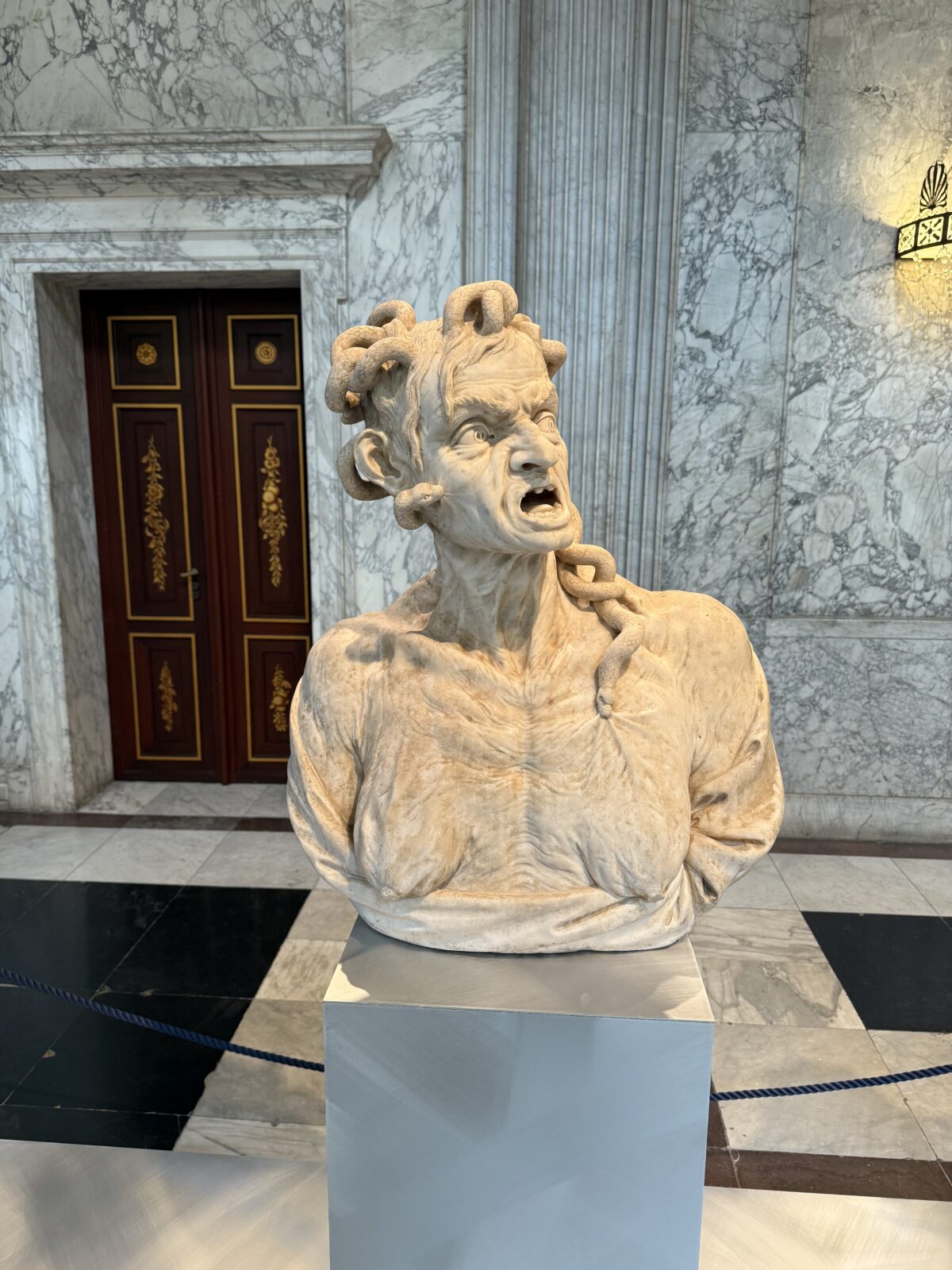
The Mirror Face: A Powerful Non-Verbal Response to Rudeness and Absurdity

By Gopal Das

Sometimes, words are not the medicine.

In the midst of conversation—especially in emotionally charged or socially unpredictable moments—we occasionally encounter statements that are so rude, absurd, or detached from basic human kindness that they defy a rational response. They catch us off guard, not just because of what is said, but because of the jarring break from empathy, reason, or relational attunement.

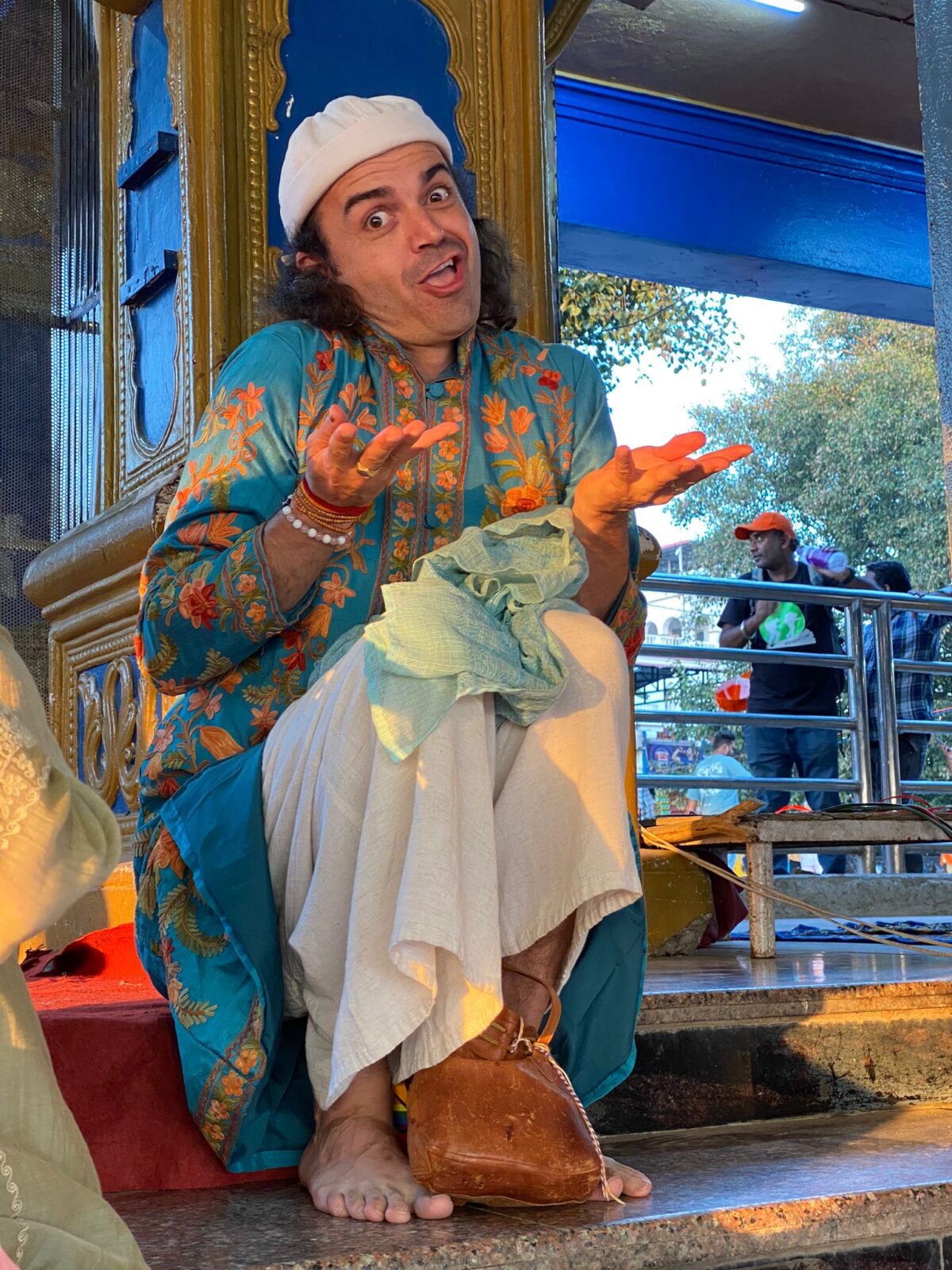
It’s in these moments that I’ve found a powerful ally in what I call “The Mirror Face.”

What Is the Mirror Face?

It’s not sarcasm. It’s not mockery. It’s not passive-aggression.

It’s a facial expression—wide-eyed, slightly stunned, unblinking, steady—that silently reflects back the energy of what was just said. It doesn’t add heat to the fire. It doesn’t give the rude or unkind statement more power. And it doesn’t invite further escalation.

Instead, it offers something much more profound: a pause.

Why It Works

1. It Creates a Pattern Interrupt

People who say unkind or inappropriate things often expect some kind of emotional feedback—whether it’s outrage, retreat, laughter, or approval. The Mirror Face gives them none of that. It interrupts the energetic transaction and breaks the automatic loop of cause and effect. Without feeding the moment, it forces a small—yet powerful—stillness to arise.

2. It Acts as a Mirror, Not a Weapon

There is no attack in this expression. It’s simply a reflection. It hands the moment back to the speaker without commentary, as if to say:

“Here. Take another look at what just emerged from you.”

That kind of mirroring, especially in a culture addicted to quick comebacks and defensive energy, can be startlingly effective.

3. It Offers Space Without Enabling Harm

The Mirror Face doesn’t shut the person down. It holds the door open for awareness, accountability, and even humor to emerge. It can invite reflection, but without coddling. It’s a boundary that doesn’t bark.

How to Use It

You don’t need to rehearse it. You’ve probably made this face before—instinctively—when someone said something so unexpected that you had no words. The key is in consciously choosing it as a response, rather than reacting emotionally.

When someone says something:

• Deeply rude

• Emotionally manipulative

• Racist, sexist, or inappropriate

• Outrageously detached from kindness or reality

Instead of explaining, correcting, or retaliating, you pause. You hold the expression. You let the silence grow slightly uncomfortable.

Then… you breathe. You wait. You allow them to notice.

You’re not being smug. You’re being sovereign.

The Unspoken Power of Non-Reactivity

There is a sacred space between stimulus and response. In that space, your nervous system can choose truth over trauma, clarity over chaos.

The Mirror Face is a simple yet potent technique that embodies that pause. It protects your energy, interrupts toxic patterns, and invites people to sit with the energetic weight of their own words.

Sometimes silence is the loudest sound in the room.

Final Thoughts

In an age of overstimulation and emotional reactivity, the Mirror Face is a quiet revolution. It teaches us that we don’t always have to meet intensity with intensity. That presence itself can be a response. That stillness can be sharper than a sword.

Next time someone throws a curveball of cruelty or absurdity your way, don’t shrink, don’t attack, and don’t over-explain.

Just mirror it back.

Let them sit with their own echo.